
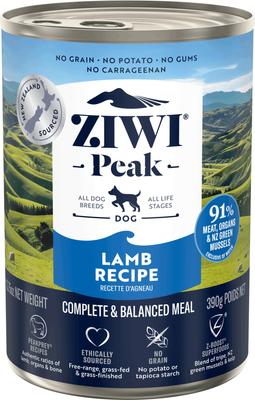
Peak Lamb Recipe Canned Dog Food, 13.75-oz, case of 12
ZIWI Peak Lamb Recipe Canned Dog Food, 13.75-oz, case of 12 earns a Sniff Score of 55/100 (C) with Fair evidence. Zero controversial ingredients flagged. Score capped at 59 due to no AAFCO statement.
Graded by The Sniff System
Strong protein profile with lamb as the primary ingredient, delivering high biological value.
Includes egg, named fish, or organ meat for diverse high-bioavailability protein.
Premium micronutrient forms such as chelated minerals or natural vitamin E.
No declared omega-3 source. Fish oil, salmon oil, and algae oil all absent.
No AAFCO statement. Nutritional completeness unverified.
Wet and fresh foods contain more water than kibble (typically 65-78%). On a dry-matter basis, this food's protein content is roughly 43%, comparable to premium kibble (typically 30-45% DMB protein).
Read why each ingredient is good or bad for dogs.
- 1protein animallamb
Real meat. Often used for dogs with chicken or beef sensitivities. Slightly higher fat content than chicken.
- 2water sufficient for processing
The regulatory phrase for cooking water in wet food. Has no nutritional implication, just labeling formality.
- 3lamb lung
- 4lamb tripe
- 5legumechickpeas
Also called garbanzo beans. Affordable plant protein source, part of the legume stack the FDA examined in its heart-disease investigation. See why →
- 6protein animallamb liver
Organ meat. Same nutrient-density story as chicken or beef liver, dense in B vitamins, iron, vitamin A.
- 7lamb heart
- 8lamb bone
- 9green mussel
Mussel from New Zealand. Natural source of glucosamine and omega-3s. Common in joint-support formulas.
- 10lecithin
Natural emulsifier, usually from soy or sunflower. Helps blend fats and water. Safe at typical inclusion.
- 11lamb kidney
- 12lamb cartilage
- 13mineralpotassium chloride
Required mineral. Sometimes used as a salt substitute. Standard inclusion in complete diets.
- 14mineralmagnesium sulfate
Source of magnesium, a required mineral. Standard inclusion in complete diets.
- 15mineralzinc amino acid complex
Zinc bound to amino acids for better absorption. Same idea as zinc proteinate, the premium form of the mineral.
- 16mineraliron amino acid complex
Iron bound to amino acids for better absorption. Premium form versus inorganic iron sulfate.
- 17mineralcopper amino acid complex
Copper bound to amino acids for better absorption. Premium form versus copper sulfate.
- 18mineralmanganese amino acid complex
Manganese bound to amino acids for better absorption. The chelated form most premium brands use.
- 19mineralselenium yeast
Organic selenium grown in yeast. The form premium brands use, gentler and more bioavailable than sodium selenite.
- 20mineralsalt
Sodium chloride. Required at small doses for normal physiology. Not a quality concern in standard amounts.
- 21supplementdried kelp
Natural source of iodine and trace minerals. A common premium-brand inclusion.
15 of 21 ingredients have a curated note. Coverage grows over time.