
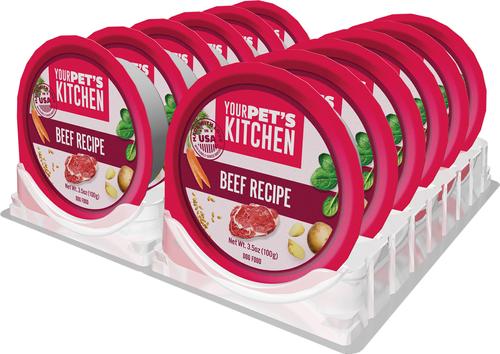
Beef Recipe Wet Dog Food, 3.5-oz cup, case of 12
Your Pet's Kitchen Beef Recipe Wet Dog Food, 3.5-oz cup, case of 12 earns a Sniff Score of 55/100 (C) with Fair evidence. 1 controversial ingredient flagged. Score capped at 59 due to no AAFCO statement.
Graded by The Sniff System
Quality carbohydrate sources with fermentable fiber.
Reasonable protein quality. beef delivers solid amino acid coverage.
Quality fat sources: named fat with marine oil (EPA and DHA source).
No AAFCO statement. Nutritional completeness unverified.
Contains added sugar. Nutritionally unjustifiable in any complete dog diet..
Controversial ingredients · 1
- sodium seleniteSynthetic selenium source. Selenium is essential, but sodium selenite has a narrower safety margin than organic alternatives like selenium yeast. Better-formulated foods use the organic form.
Every flagged ingredient has a published basis (confirmed harm / regulatory action / precautionary). See methodology →
Wet and fresh foods contain more water than kibble (typically 65-78%). On a dry-matter basis, this food's protein content is roughly 41%, comparable to premium kibble (typically 30-45% DMB protein).
Read why each ingredient is good or bad for dogs.
- 1protein animalbeef
Real meat. Dense in protein and iron. Some dogs are sensitive to it, but for most it's an excellent base.
- 2protein animalchicken
Real meat. Primary protein source, with the amino acid profile dogs actually evolved to eat.
- 3beef broth
Real broth. Adds flavor and moisture, signals the recipe leans on real meat.
- 4vegetablepotato
Standard white potato. Steady carb source, common starch in grain-free recipes.
- 5vegetablespinach
Leafy green. Some iron, vitamin K, and fiber. The dose in kibble is small but it's real food.
- 6grainbarley
Whole grain with a low glycemic profile and some soluble fiber. Easy on blood sugar.
- 7vegetablecarrots
Real vegetable. Fiber, beta-carotene, and a small amount of antioxidant value.
- 8tapioca starch
Refined cassava starch, used as a binder. Easy to digest, low on nutrition.
- 9red pepper
- 10othernatural flavor
Legal term for animal-derived flavoring, usually hydrolyzed liver or broth. Adds taste, says nothing about quality.
- 11tomato paste
- 12cane molasses
Added sugar from sugar cane. Used for palatability or texture. Dogs don't need added sugar.
- 13mineralsalt
Sodium chloride. Required at small doses for normal physiology. Not a quality concern in standard amounts.
- 14fatfish oil
Concentrated omega-3s. The reason 'EPA' and 'DHA' get to show up on the bag.
- 15mineralcalcium carbonate
Source of calcium. Functional. Required in complete dog foods, especially those without bone-in meat meals.
- 16fiberinulin
Prebiotic fiber that feeds beneficial gut bacteria. Same compound found in chicory root.
- 17yeast culture
Fermented yeast. Source of B vitamins and beta-glucans that some research suggests support immune function.
- 18mineralpotassium chloride
Required mineral. Sometimes used as a salt substitute. Standard inclusion in complete diets.
- 19l-ascorbyl-2-polyphosphate
A stable form of vitamin C used in pet food. Provides antioxidant support and survives processing better than plain ascorbic acid.
- 20supplementcholine chloride
Essential nutrient for liver and brain function. Standard inclusion in complete dog foods.
- 21vitaminvitamin e supplement
Required nutrient and a natural antioxidant. Often pulls double duty as a preservative.
- 22zinc oxide
Inorganic zinc. Cheapest mineral form on the market. Functional but less bioavailable than chelated alternatives.
- 23mineralmagnesium sulfate
Source of magnesium, a required mineral. Standard inclusion in complete diets.
- 24iron glycine complex
- 25fatsunflower oil
Common plant oil. Useful in moderation for omega-6, though too much skews the omega ratio against the dog's favor.
Showing first 25 of 39. Position 1-5 has the largest weight in the recipe.
22 of 25 ingredients have a curated note. Coverage grows over time.