
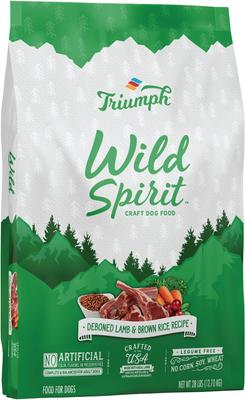
Wild Spirit Deboned Lamb & Brown Rice Recipe Dry Dog Food, 28-lb bag
Triumph Wild Spirit Deboned Lamb & Brown Rice Recipe Dry Dog Food, 28-lb bag earns a Sniff Score of 59/100 (C) with Fair evidence. Zero controversial ingredients flagged. Score capped at 59 due to no AAFCO statement.
Graded by The Sniff System
Strong protein profile with lamb as the primary ingredient, delivering high biological value.
Quality carbohydrate sources with fermentable fiber.
Quality fat sources: named fat with marine oil (EPA and DHA source).
No AAFCO statement. Nutritional completeness unverified.
Controversial ingredients · 1
- sodium seleniteSynthetic selenium source. Selenium is essential, but sodium selenite has a narrower safety margin than organic alternatives like selenium yeast. Better-formulated foods use the organic form.
Every flagged ingredient has a published basis (confirmed harm / regulatory action / precautionary). See methodology →
Read why each ingredient is good or bad for dogs.
- 1protein animallamb
Real meat. Often used for dogs with chicken or beef sensitivities. Slightly higher fat content than chicken.
- 2protein animalturkey meal
Turkey with the water cooked out. Per pound, packs more protein than fresh turkey.
- 3protein animalchicken meal
Chicken with the water cooked out. Per pound, packs more protein than fresh chicken.
- 4grainbrown rice
Whole grain that's easy to digest. Steady carb energy plus a little fiber.
- 5grainbarley
Whole grain with a low glycemic profile and some soluble fiber. Easy on blood sugar.
- 6oat groats
Whole oats with only the inedible hull removed. The most intact form of oats available.
- 7grainrice
Generic rice. Could be white or brown, the label doesn't say. Brown rice would be specified if it were.
- 8fatchicken fat
Despite the name, a high-quality energy source. Concentrated calories plus essential fatty acids like linoleic acid.
- 9dried plain beet pulp
Beet fiber, with the sugar removed. Long unfairly maligned. It's a real soluble fiber that supports stool quality.
- 10othernatural flavor
Legal term for animal-derived flavoring, usually hydrolyzed liver or broth. Adds taste, says nothing about quality.
- 11mineralsalt
Sodium chloride. Required at small doses for normal physiology. Not a quality concern in standard amounts.
- 12mineralpotassium chloride
Required mineral. Sometimes used as a salt substitute. Standard inclusion in complete diets.
- 13mineraldicalcium phosphate
Calcium and phosphorus combined. Required source of both minerals, especially in formulas without much bone content.
- 14flaxseed meal
- 15fatfish oil
Concentrated omega-3s. The reason 'EPA' and 'DHA' get to show up on the bag.
- 16fatcoconut oil
Saturated fat with medium-chain triglycerides. Mostly marketing in the doses kibble uses, but harmless.
- 17fiberinulin
Prebiotic fiber that feeds beneficial gut bacteria. Same compound found in chicory root.
- 18vegetablecarrots
Real vegetable. Fiber, beta-carotene, and a small amount of antioxidant value.
- 19dried apples
Real fruit, some fiber and antioxidants. The amount in kibble is too small to matter much.
- 20fruitcranberries
Often added with a urinary-tract-support marketing angle. Real cranberry compounds help in concentrate form, but kibble doses are small.
- 21vegetablepumpkin
Soluble fiber that supports stool quality. Mild and well-tolerated.
- 22zucchini
- 23supplementturmeric
Spice with anti-inflammatory compounds. Real research in humans, but the dose in kibble is small. Mostly there for label appeal.
- 24olive oil
- 25supplementtaurine
Amino acid critical for heart health. Especially important in grain-free or pulse-heavy formulas where natural taurine precursors run thin.
Showing first 25 of 41. Position 1-5 has the largest weight in the recipe.
22 of 25 ingredients have a curated note. Coverage grows over time.