
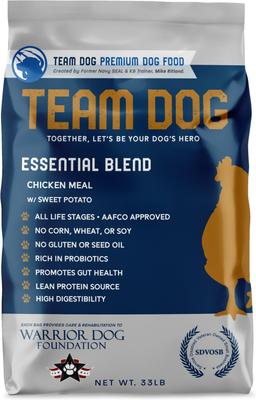
Chicken Meal & Sweet Potato 26/20 Essential Blend Premium Dry Dog Food, 33-lb bag
TEAM DOG Chicken Meal & Sweet Potato 26/20 Essential Blend Premium Dry Dog Food, 33-lb bag earns a Sniff Score of 67/100 (B) with Fair evidence. 1 controversial ingredient flagged. Reasonable protein quality. chicken meal delivers solid amino acid coverage..
Graded by The Sniff System
Reasonable protein quality. chicken meal delivers solid amino acid coverage.
Quality carbohydrate sources with fermentable fiber.
Quality fat sources: named fat with marine oil (EPA and DHA source).
Contains menadione. Banned for human OTC use but tolerated at AAFCO-permitted levels in pet food. The only AAFCO-permitted vitamin K source..
Read why each ingredient is good or bad for dogs.
- 1protein animalchicken meal
Chicken with the water cooked out. Per pound, packs more protein than fresh chicken.
- 2grainoats
Whole grain. Steady energy, soluble fiber, and well-tolerated by most dogs.
- 3grainbrown rice
Whole grain that's easy to digest. Steady carb energy plus a little fiber.
- 4fatchicken fat
Despite the name, a high-quality energy source. Concentrated calories plus essential fatty acids like linoleic acid.
- 5vegetablesweet potato
Complex carb with fiber and beta-carotene. Gentle on the stomach.
- 6protein animalherring meal
Concentrated herring with the water removed. Carries protein and omega-3s in one ingredient.
- 7grainmillet
Gluten-free whole grain. Fine for most dogs, often used as an alternative to rice.
- 8fiberbeet pulp
Soluble fiber from sugar-beet processing. Sometimes treated as a filler, but it's actually one of the better fiber sources in kibble.
- 9egg powder
- 10brewer's dried yeast
- 11herring oil
Concentrated omega-3 from herring. Same role as salmon oil, skin and coat support.
- 12protein animalchicken liver
Organ meat. Dense in protein, iron, vitamin A, and the B vitamins. Among the most nutrient-rich ingredients a dog can eat.
- 13mineralsalt
Sodium chloride. Required at small doses for normal physiology. Not a quality concern in standard amounts.
- 14calcium propionate
- 15lecithin
Natural emulsifier, usually from soy or sunflower. Helps blend fats and water. Safe at typical inclusion.
- 16kelp meal
- 17mineralpotassium chloride
Required mineral. Sometimes used as a salt substitute. Standard inclusion in complete diets.
- 18supplementdl-methionine
Essential amino acid. Often added when plant proteins dominate, since methionine is naturally lower in pulses than meat.
- 19supplementtaurine
Amino acid critical for heart health. Especially important in grain-free or pulse-heavy formulas where natural taurine precursors run thin.
- 20bacillus licheniformis
- 21bacillus subtilis
- 22supplementyucca schidigera extract
Plant extract added to reduce stool odor. Functional, not nutritional. Fine in trace amounts.
- 23mineralcalcium carbonate
Source of calcium. Functional. Required in complete dog foods, especially those without bone-in meat meals.
- 24mineralselenium yeast
Organic selenium grown in yeast. The form premium brands use, gentler and more bioavailable than sodium selenite.
- 25mineraliron proteinate
Iron bound to protein for better absorption. The premium form versus inorganic iron sulfate.
Showing first 25 of 42. Position 1-5 has the largest weight in the recipe.
19 of 25 ingredients have a curated note. Coverage grows over time.
This recipe is formulated to meet the nutritional levels established by the AAFCO Dog Food Nutrient Profiles for All Life Stages including the growth of large size dogs (70 pounds or more as an adult). The AAFCO does not regulate, test, approve, or certify pet food. It establishes a model language that states and other governing bodies may adopt into law.