
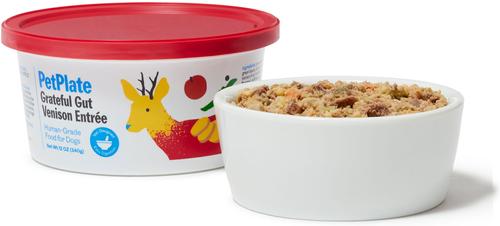
Human Grade Lean & Mean Venison Entree Fresh Dog Food, 12-oz cup, case of 12
PetPlate Human Grade Lean & Mean Venison Entree Fresh Dog Food, 12-oz cup, case of 12 earns a Sniff Score of 56/100 (C) with Fair evidence. Zero controversial ingredients flagged. Score capped at 59 due to no AAFCO statement.
Graded by The Sniff System
Quality fat sources: named fat with marine oil (EPA and DHA source).
Quality carbohydrate sources with declared fiber.
Includes egg, named fish, or organ meat for diverse high-bioavailability protein.
Low protein quality. ground venison delivers limited bioavailable amino acids.
No AAFCO statement. Nutritional completeness unverified.
Controversial ingredients · 1
- sodium seleniteSynthetic selenium source. Selenium is essential, but sodium selenite has a narrower safety margin than organic alternatives like selenium yeast. Better-formulated foods use the organic form.
Every flagged ingredient has a published basis (confirmed harm / regulatory action / precautionary). See methodology →
Wet and fresh foods contain more water than kibble (typically 65-78%). On a dry-matter basis, this food's protein content is roughly 29%, comparable to premium kibble (typically 30-45% DMB protein).
Read why each ingredient is good or bad for dogs.
- 1ground venison
Real meat, lean and gamey. Used as a novel protein for dogs with sensitivities.
- 2vegetablepotato
Standard white potato. Steady carb source, common starch in grain-free recipes.
- 3fruitapples
Real fruit, some fiber and antioxidants. The amount in kibble is too small to matter much.
- 4green beans
Real vegetable. Fiber and a small amount of vitamins. Often used in weight-management formulas because it bulks up a meal without adding calories.
- 5vegetablesweet potato
Complex carb with fiber and beta-carotene. Gentle on the stomach.
- 6pasta
- 7vegetablecarrots
Real vegetable. Fiber, beta-carotene, and a small amount of antioxidant value.
- 8venison liver
- 9red bell peppers
- 10fatground flaxseed
Cracked flaxseed for better digestibility. Same plant omega-3s as whole flaxseed, just easier for the dog to extract.
- 11vinegar
Mild acid used for flavor or pH adjustment. Safe at typical inclusion.
- 12safflower oil
- 13potato starch
Refined potato. Pure carb energy, low on other nutrition. Often used as a binder in grain-free recipes.
- 14mineraldicalcium phosphate
Calcium and phosphorus combined. Required source of both minerals, especially in formulas without much bone content.
- 15fatsalmon oil
Pure omega-3s. The thing skin-and-coat formulas are usually built around.
- 16mineralsalt
Sodium chloride. Required at small doses for normal physiology. Not a quality concern in standard amounts.
- 17othernatural flavor
Legal term for animal-derived flavoring, usually hydrolyzed liver or broth. Adds taste, says nothing about quality.
- 18ferrous fumarate
- 19zinc oxide
Inorganic zinc. Cheapest mineral form on the market. Functional but less bioavailable than chelated alternatives.
- 20copper gluconate
- 21manganese gluconate
- 22mineralsodium selenite Flagged
Inorganic selenium. Effective at AAFCO levels, no documented safety concern in dogs despite what some pet food blogs claim. Selenium yeast is a marginal upgrade, not a necessity. See why →
- 23mineralpotassium iodide
Source of iodine, an essential trace mineral for thyroid function. Required for AAFCO-complete formulas.
- 24mineralmagnesium oxide
Inorganic magnesium. Functional at AAFCO doses, less efficiently absorbed than chelated forms.
- 25preservative naturalmixed tocopherols
Natural vitamin E used to keep fats from going rancid. The good kind of preservative.
Showing first 25 of 31. Position 1-5 has the largest weight in the recipe.
18 of 25 ingredients have a curated note. Coverage grows over time.