
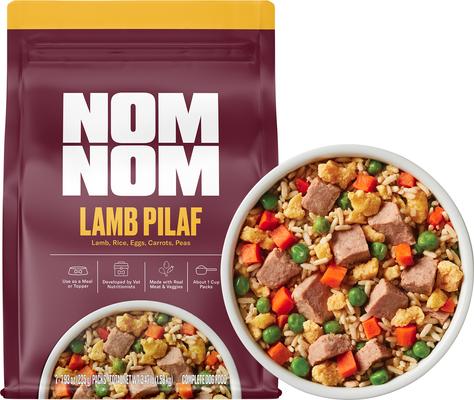
Freshly-Made Frozen Lamb Pilaf Dog Food, 7.9-oz pouch, case of 7
Nom Nom Freshly-Made Frozen Lamb Pilaf Dog Food, 7.9-oz pouch, case of 7 earns a Sniff Score of 52/100 (C) with Fair evidence. Zero controversial ingredients flagged. Score capped at 59 due to no AAFCO statement.
Graded by The Sniff System
Reasonable protein quality. ground lamb delivers solid amino acid coverage.
Includes egg, named fish, or organ meat for diverse high-bioavailability protein.
No AAFCO statement. Nutritional completeness unverified.
Wet and fresh foods contain more water than kibble (typically 65-78%). On a dry-matter basis, this food's protein content is roughly 24%, comparable to premium kibble (typically 30-45% DMB protein).
Read why each ingredient is good or bad for dogs.
- 1ground lamb
Real meat. Often used for dogs with chicken or beef sensitivities. Slightly higher fat content than chicken.
- 2grainbrown rice
Whole grain that's easy to digest. Steady carb energy plus a little fiber.
- 3egg
Whole eggs. The highest-quality protein on any ingredient label, by amino acid score.
- 4vegetablecarrots
Real vegetable. Fiber, beta-carotene, and a small amount of antioxidant value.
- 5legumepeas
Cheap protein bulk. Fine in small amounts, but when peas stack with lentils and chickpeas in the top ingredients, it's the pattern the FDA flagged in its heart-disease investigation. See why →
- 6water sufficient for processing
The regulatory phrase for cooking water in wet food. Has no nutritional implication, just labeling formality.
- 7mineraldicalcium phosphate
Calcium and phosphorus combined. Required source of both minerals, especially in formulas without much bone content.
- 8othernatural flavor
Legal term for animal-derived flavoring, usually hydrolyzed liver or broth. Adds taste, says nothing about quality.
- 9preservative naturalcitric acid
Natural antioxidant preservative. Helps keep fats from going rancid.
- 10vinegar
Mild acid used for flavor or pH adjustment. Safe at typical inclusion.
- 11mineralsalt
Sodium chloride. Required at small doses for normal physiology. Not a quality concern in standard amounts.
- 12mineralcalcium carbonate
Source of calcium. Functional. Required in complete dog foods, especially those without bone-in meat meals.
- 13mineralpotassium chloride
Required mineral. Sometimes used as a salt substitute. Standard inclusion in complete diets.
- 14choline bitartrate
- 15potassium carbonate
- 16dimagnesium phosphate
- 17zinc gluconate
- 18iron amino acid chelate
Iron bound to amino acids for better absorption. Premium form versus inorganic iron sulfate.
- 19fatcanola oil
Plant oil. Some omega-3 from the parent plant, though dogs absorb it less efficiently than fish-derived omega-3. Fine in moderation.
- 20vitaminvitamin e supplement
Required nutrient and a natural antioxidant. Often pulls double duty as a preservative.
- 21mineralpotassium iodide
Source of iodine, an essential trace mineral for thyroid function. Required for AAFCO-complete formulas.
- 22vitaminvitamin b12 supplement
Essential for red blood cell formation and neurological function. Plant ingredients lack B12, so it has to be added.
- 23copper gluconate
- 24manganese gluconate
- 25selenium amino acid chelate
Showing first 25 of 33. Position 1-5 has the largest weight in the recipe.
18 of 25 ingredients have a curated note. Coverage grows over time.