
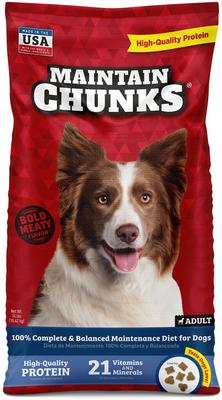
Meaty Flavor Dry Dog Food, 34-lb bag
Maintain Chunks Meaty Flavor Dry Dog Food, 34-lb bag earns a Sniff Score of 5/100 (F) with Fair evidence. 2 controversial ingredients flagged. Score capped at 59 due to no AAFCO statement.
Graded by The Sniff System
Controversial ingredients · 3
- animal digestChemically or enzymatically hydrolyzed animal tissue from unspecified species. Used as a flavor coating. Source quality cannot be verified.
- menadioneSynthetic vitamin K3. Banned in human supplements due to toxicity concerns at high doses. Permitted in pet food but premium brands use natural vitamin K alternatives.
- sodium seleniteSynthetic selenium source. Selenium is essential, but sodium selenite has a narrower safety margin than organic alternatives like selenium yeast. Better-formulated foods use the organic form.
Every flagged ingredient has a published basis (confirmed harm / regulatory action / precautionary). See methodology →
Read why each ingredient is good or bad for dogs.
- 1grainyellow corn
- 2wheat mill run
- 3meat and bone meal
Unnamed animal protein with bone included. Cheap, vague, and not traceable to a specific species.
- 4cooked wheat
- 5protein plantsoybean meal
Concentrated soy protein. Cheap plant protein that pads the label number, common in budget formulas.
- 6animal fat
Unnamed fat source. The species matters: 'chicken fat' or 'beef fat' is fine, but 'animal fat' tells you nothing about origin.
- 7mineralsalt
Sodium chloride. Required at small doses for normal physiology. Not a quality concern in standard amounts.
- 8protein animalanimal digest Flagged
A liquid flavoring made from hydrolyzed animal tissue, sprayed onto kibble for palatability. Common, not directly harmful, but vague about source.
- 9fibertomato pomace
The fiber-rich byproduct of tomato processing. Sometimes flagged unfairly. It's a real fiber source, not a filler shortcut.
- 10mineralpotassium chloride
Required mineral. Sometimes used as a salt substitute. Standard inclusion in complete diets.
- 11supplementcholine chloride
Essential nutrient for liver and brain function. Standard inclusion in complete dog foods.
- 12vitaminvitamin e supplement
Required nutrient and a natural antioxidant. Often pulls double duty as a preservative.
- 13vitaminvitamin a supplement
Vitamin A in stable, standardized form. Required for vision, immune function, and growth.
- 14pantothenic acid
- 15vitaminniacin supplement
B vitamin (B3). Required in complete dog foods, added as a supplement to standardize the dose.
- 16vitaminriboflavin supplement
B vitamin (B2). Required in complete dog foods. The standardized form ensures consistent dosing.
- 17vitaminmenadione Flagged
Same as menadione sodium bisulfite complex. Synthetic K3, banned in human supplements but the only AAFCO-approved K source, which is why even premium brands use it. See why →
- 18vitaminvitamin b12 supplement
Essential for red blood cell formation and neurological function. Plant ingredients lack B12, so it has to be added.
- 19vitaminthiamine mononitrate
B vitamin (B1). Essential for nervous system function. Cooked-in vitamin loss is why thiamine is always added back.
- 20vitaminpyridoxine hydrochloride
B vitamin (B6). Essential for protein metabolism. Standard inclusion in complete formulas.
- 21vitaminbiotin
B vitamin that supports skin and coat health. Required for AAFCO-complete formulas.
- 22vitaminfolic acid
B vitamin (B9), essential for cell function. Standard in complete dog foods.
- 23vitaminvitamin d3 supplement
The active form of vitamin D dogs need. Required for calcium absorption and bone health.
- 24mineralzinc sulfate
Inorganic zinc. Effective at AAFCO doses but less well-absorbed than chelated forms like zinc proteinate.
- 25mineralferrous sulfate
Inorganic iron. Standard mineral source. Iron proteinate is the gentler, better-absorbed premium form.
Showing first 25 of 34. Position 1-5 has the largest weight in the recipe.
21 of 25 ingredients have a curated note. Coverage grows over time.