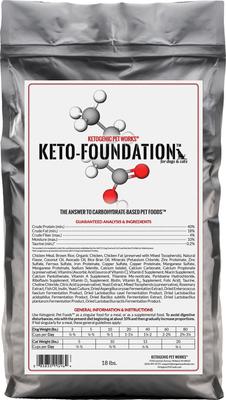
Keto Foundation Dog & Cat Dry Food, 18-lb bag
Ketogenic Pet Food Keto Foundation Dog & Cat Dry Food, 18-lb bag earns a Sniff Score of 59/100 (C) with Fair evidence. 1 controversial ingredient flagged. Score capped at 59 due to no AAFCO statement.
Graded by The Sniff System
Quality carbohydrate sources with fermentable fiber.
Reasonable protein quality. chicken meal delivers solid amino acid coverage.
Premium micronutrient forms such as chelated minerals or natural vitamin E.
No AAFCO statement. Nutritional completeness unverified.
Contains msg. Safety signal is internet-fueled; real issue is transparency. Yeast extract as MSG loophole obscures formulation..
Controversial ingredients · 1
- sodium seleniteSynthetic selenium source. Selenium is essential, but sodium selenite has a narrower safety margin than organic alternatives like selenium yeast. Better-formulated foods use the organic form.
Every flagged ingredient has a published basis (confirmed harm / regulatory action / precautionary). See methodology →
Read why each ingredient is good or bad for dogs.
- 1protein animalchicken meal
Chicken with the water cooked out. Per pound, packs more protein than fresh chicken.
- 2grainbrown rice
Whole grain that's easy to digest. Steady carb energy plus a little fiber.
- 3protein animalchicken
Real meat. Primary protein source, with the amino acid profile dogs actually evolved to eat.
- 4fatchicken fat
Despite the name, a high-quality energy source. Concentrated calories plus essential fatty acids like linoleic acid.
- 5othernatural flavor
Legal term for animal-derived flavoring, usually hydrolyzed liver or broth. Adds taste, says nothing about quality.
- 6mineralcalcium carbonate
Source of calcium. Functional. Required in complete dog foods, especially those without bone-in meat meals.
- 7avocado oil
- 8fatcoconut oil
Saturated fat with medium-chain triglycerides. Mostly marketing in the doses kibble uses, but harmless.
- 9rice bran oil
- 10supplementtaurine
Amino acid critical for heart health. Especially important in grain-free or pulse-heavy formulas where natural taurine precursors run thin.
- 11calcium propionate
- 12supplementcholine chloride
Essential nutrient for liver and brain function. Standard inclusion in complete dog foods.
- 13preservative naturalcitric acid
Natural antioxidant preservative. Helps keep fats from going rancid.
- 14yeast extract
Yeast broken down to a paste. Strong palatant plus a real source of B vitamins.
- 15preservative naturalmixed tocopherols
Natural vitamin E used to keep fats from going rancid. The good kind of preservative.
- 16preservative naturalrosemary extract
Natural preservative. Replaces synthetic ones like BHA and BHT.
- 17fiberchicory root
Prebiotic fiber that supports gut bacteria. A genuine functional ingredient, not marketing.
- 18yeast culture
Fermented yeast. Source of B vitamins and beta-glucans that some research suggests support immune function.
- 19mineralpotassium chloride
Required mineral. Sometimes used as a salt substitute. Standard inclusion in complete diets.
- 20mineralzinc proteinate
Zinc bound to protein for better absorption. The premium form of the mineral, versus zinc oxide which sits cheaper on the label.
- 21mineralzinc sulfate
Inorganic zinc. Effective at AAFCO doses but less well-absorbed than chelated forms like zinc proteinate.
- 22mineralferrous sulfate
Inorganic iron. Standard mineral source. Iron proteinate is the gentler, better-absorbed premium form.
- 23mineraliron proteinate
Iron bound to protein for better absorption. The premium form versus inorganic iron sulfate.
- 24mineralcopper sulfate
Inorganic copper. Standard, effective at small doses. Premium formulas tend to use copper proteinate instead.
- 25mineralcopper proteinate
Copper bound to protein for better absorption. Common in better-formulated diets.
Showing first 25 of 38. Position 1-5 has the largest weight in the recipe.
22 of 25 ingredients have a curated note. Coverage grows over time.