
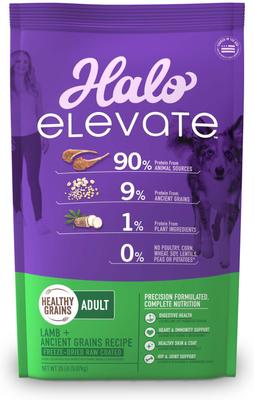
Elevate Healthy Grains Lamb Recipe Dry Dog Food, 20-lb bag
Halo Elevate Healthy Grains Lamb Recipe Dry Dog Food, 20-lb bag earns a Sniff Score of 59/100 (C) with Fair evidence. Zero controversial ingredients flagged. Score capped at 59 due to no AAFCO statement.
Graded by The Sniff System
Strong protein profile with lamb as the primary ingredient, delivering high biological value.
Quality carbohydrate sources with fermentable fiber.
Quality fat sources: named fat with marine oil (EPA and DHA source).
No AAFCO statement. Nutritional completeness unverified.
Controversial ingredients · 1
- sodium seleniteSynthetic selenium source. Selenium is essential, but sodium selenite has a narrower safety margin than organic alternatives like selenium yeast. Better-formulated foods use the organic form.
Every flagged ingredient has a published basis (confirmed harm / regulatory action / precautionary). See methodology →
Read why each ingredient is good or bad for dogs.
- 1protein animallamb
Real meat. Often used for dogs with chicken or beef sensitivities. Slightly higher fat content than chicken.
- 2protein animallamb meal
Lamb cooked down to a dry concentrate. Per pound, more protein than fresh lamb.
- 3protein animalsalmon meal
Salmon cooked into a dry concentrate. Carries both protein and natural omega-3s in one ingredient.
- 4grainoats
Whole grain. Steady energy, soluble fiber, and well-tolerated by most dogs.
- 5grainbarley
Whole grain with a low glycemic profile and some soluble fiber. Easy on blood sugar.
- 6tapioca
Starch from cassava root. Highly digestible energy source, but pure starch with minimal nutrition beyond that.
- 7natural pork flavor
- 8protein animalpork
Real meat. Dense protein and fat, though less common in dog food than chicken or beef.
- 9protein animalpork meal
Pork cooked into a dry concentrate. Per pound, more protein than fresh pork.
- 10grainquinoa
Pseudo-grain with a complete amino acid profile. Rare in dog food because it's expensive.
- 11pork fat
Real animal fat from a named species. Clean energy source.
- 12fatsunflower oil
Common plant oil. Useful in moderation for omega-6, though too much skews the omega ratio against the dog's favor.
- 13othernatural flavor
Legal term for animal-derived flavoring, usually hydrolyzed liver or broth. Adds taste, says nothing about quality.
- 14fatsalmon oil
Pure omega-3s. The thing skin-and-coat formulas are usually built around.
- 15mineralpotassium chloride
Required mineral. Sometimes used as a salt substitute. Standard inclusion in complete diets.
- 16mineralsalt
Sodium chloride. Required at small doses for normal physiology. Not a quality concern in standard amounts.
- 17protein animalsalmon
Real fish meat. Natural source of omega-3s, which kibble usually has to add back from oil.
- 18supplementcholine chloride
Essential nutrient for liver and brain function. Standard inclusion in complete dog foods.
- 19supplementtaurine
Amino acid critical for heart health. Especially important in grain-free or pulse-heavy formulas where natural taurine precursors run thin.
- 20fiberinulin
Prebiotic fiber that feeds beneficial gut bacteria. Same compound found in chicory root.
- 21vitaminvitamin e supplement
Required nutrient and a natural antioxidant. Often pulls double duty as a preservative.
- 22vitaminniacin supplement
B vitamin (B3). Required in complete dog foods, added as a supplement to standardize the dose.
- 23vitamind-calcium pantothenate
B vitamin (B5). Standard inclusion in complete dog foods.
- 24vitaminriboflavin supplement
B vitamin (B2). Required in complete dog foods. The standardized form ensures consistent dosing.
- 25vitaminvitamin a supplement
Vitamin A in stable, standardized form. Required for vision, immune function, and growth.
Showing first 25 of 40. Position 1-5 has the largest weight in the recipe.
24 of 25 ingredients have a curated note. Coverage grows over time.