
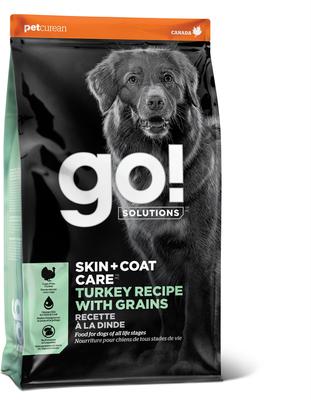
Skin + Coat Care Turkey Recipe Dry Dog Food, 22-lb bag
Go! Solutions Skin + Coat Care Turkey Recipe Dry Dog Food, 22-lb bag earns a Sniff Score of 59/100 (C) with Fair evidence. Zero controversial ingredients flagged. Score capped at 59 due to no AAFCO statement.
Graded by The Sniff System
Strong protein profile with de-boned turkey as the primary ingredient, delivering high biological value.
Quality carbohydrate sources with fermentable fiber.
Quality fat sources: named fat with marine oil (EPA and DHA source).
No AAFCO statement. Nutritional completeness unverified.
Read why each ingredient is good or bad for dogs.
- 1de-boned turkey
- 2protein animalturkey meal
Turkey with the water cooked out. Per pound, packs more protein than fresh turkey.
- 3grainoatmeal
Gentle on the stomach. Slow-release carbs and soluble fiber that supports stool quality.
- 4grainbrown rice
Whole grain that's easy to digest. Steady carb energy plus a little fiber.
- 5grainoats
Whole grain. Steady energy, soluble fiber, and well-tolerated by most dogs.
- 6fatcanola oil
Plant oil. Some omega-3 from the parent plant, though dogs absorb it less efficiently than fish-derived omega-3. Fine in moderation.
- 7natural flavour
- 8protein animaldried egg
Whole eggs. The highest-quality protein on any ingredient label, by amino acid score.
- 9fatcoconut oil
Saturated fat with medium-chain triglycerides. Mostly marketing in the doses kibble uses, but harmless.
- 10fatsalmon oil
Pure omega-3s. The thing skin-and-coat formulas are usually built around.
- 11fruitapples
Real fruit, some fiber and antioxidants. The amount in kibble is too small to matter much.
- 12vegetablecarrots
Real vegetable. Fiber, beta-carotene, and a small amount of antioxidant value.
- 13fruitcranberries
Often added with a urinary-tract-support marketing angle. Real cranberry compounds help in concentrate form, but kibble doses are small.
- 14mineralsodium chloride
Same as salt. Required mineral, necessary at small doses.
- 15mineralpotassium chloride
Required mineral. Sometimes used as a salt substitute. Standard inclusion in complete diets.
- 16fiberdried chicory root
Natural prebiotic. Feeds beneficial gut bacteria. The same compound (inulin) used in human gut-health products.
- 17probioticdried lactobacillus acidophilus fermentation product
A probiotic strain. Whether the dose is high enough to actually colonize is debated, but it's a real beneficial bacterium.
- 18probioticdried enterococcus faecium fermentation product
- 19mineralzinc proteinate
Zinc bound to protein for better absorption. The premium form of the mineral, versus zinc oxide which sits cheaper on the label.
- 20mineraliron proteinate
Iron bound to protein for better absorption. The premium form versus inorganic iron sulfate.
- 21mineralcopper proteinate
Copper bound to protein for better absorption. Common in better-formulated diets.
- 22zinc oxide
Inorganic zinc. Cheapest mineral form on the market. Functional but less bioavailable than chelated alternatives.
- 23mineralmanganese proteinate
Manganese bound to protein for better absorption. The chelated form most premium brands use.
- 24copper sulphate
- 25ferrous sulphate
Showing first 25 of 33. Position 1-5 has the largest weight in the recipe.
20 of 25 ingredients have a curated note. Coverage grows over time.